What to look out for before calling an electrician about potential hazards
Signs that need your attention
Electrical faults in a home can start small and grow into serious problems. Some signs are obvious, others are subtle. If something in your house does not seem right with the wiring or an appliance, pausing to check a few things before you pick up the phone can help you describe the issue clearly and give the electrician a head start. That saves time and means the job gets done faster. Below are the main points worth reviewing before you call a professional for hazardous wiring repair.
1. Do you have a burning smell that will not go away?
A persistent burning smell near an outlet, a switch, or an appliance is the most common early signal. The odour usually comes from melting plastic or damaged insulation inside the wall. If you smell it, do not ignore it. Check whether the smell is strongest near one spot. If it is, unplug everything from that outlet and keep it switched off. A faint smell that comes and goes could be a dusty heater element, but a constant acrid smell points to overheating wires. That is a clear reason to call an electrician. In the meantime, make sure your smoke detector on that floor is working and has fresh batteries.
2. Can you see or hear sparks?
An occasional small spark when you plug something in is normal for some older outlets. But repeated electrical sparking, especially with a loud snap or a flash, is not. Look at the outlet face and the plug prongs for scorch marks. If the spark happens every time you use the switch, the wiring behind the plate may be loose or the receptacle may be worn out. Do not keep using that outlet. Leave it turned off at the breaker if you feel confident doing that safely. Before you call, note down which outlet and what you were plugging in. That detail helps the technician decide what tools and parts to bring.
3. Is any part of the wall or outlet hot to the touch?
Outlets and switches should feel the same temperature as the wall around them. If a switch plate or outlet cover feels warm or hot, the circuit is under strain. Overheating is a slow process that can melt the insulation on wires and eventually start an electrical fire. Touch the cover with the back of your hand to check for heat without pressing hard. If it is hot, stop using that circuit and keep children and pets away. An electrician will look for loose connections or a circuit that is overloaded. This is a classic case where you need professional hazardous wiring repair rather than a simple swap of the outlet.

4. Do your lights flicker or dim for no reason?
Flickering lights can have harmless causes, like a bulb working loose or a dimmer switch that is not compatible with the bulb type. But if the flickering happens on multiple lights at the same time, or if it gets worse when a large appliance kicks on, the problem may be in the main panel or a loose connection in the circuit. Check whether the flickering follows a pattern. Try swapping the bulb with a known good one. If the flicker stays, the issue is in the wiring. An electrician can trace it with specialised tools. Do not open any junction boxes yourself. Leave that to a pro.
5. Has a breaker tripped or a fuse blown more than once?
A breaker that trips occasionally is doing its job. But if the same breaker trips repeatedly, or if it trips as soon as you reset it, there is a problem. It could be a short circuit, a ground fault, or an arc fault inside a wire or appliance. Before you call, try to identify what was running on that circuit when it tripped. Write down the breaker label and the last thing you turned on. That information helps the electrician narrow down the cause. Do not keep resetting a breaker that trips immediately. That can overheat the panel and damage the wiring.
What to do after your initial check
Once you have gone through these points, you will have a clearer picture of what is wrong. You might know whether the problem is in one outlet, one circuit, or throughout the house. That is the kind of detail that makes a service call more efficient. When you call the electrician, tell them exactly what you noticed: the smell, the heat, the spark, or the repeated tripping. They will ask about the age of your home and whether you have done any recent DIY wiring. Be honest about that. Many residential electrical problems start with a previous owner or a handyman who did not follow code.
Sometimes the issue is not in the wiring itself but in an appliance. An overheating motor in a refrigerator or an air conditioner can produce a burning smell, but it may not be a wiring fault. If you suspect the appliance, unplug it and see whether the smell clears. If it does, the appliance needs service, not the house wiring. However, if the smell lingers or the outlet stays hot, the problem is likely in the fixed wiring. An electrician can test the circuit and safely isolate it.
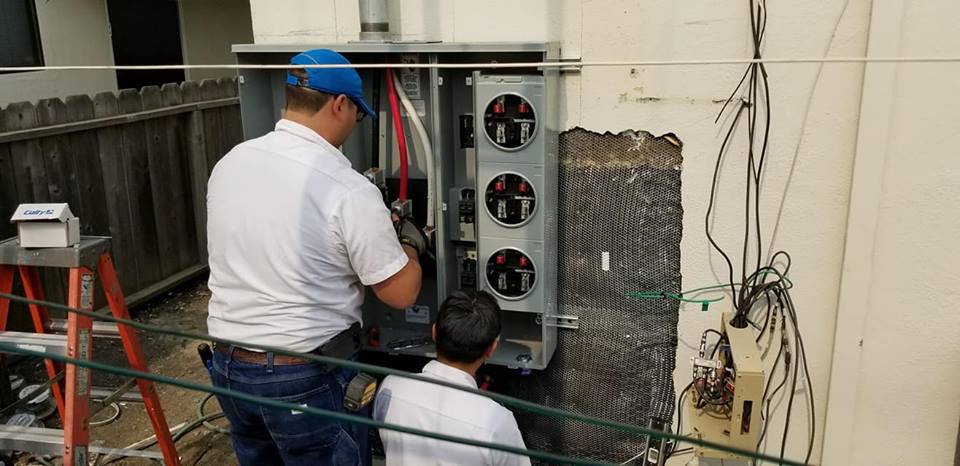
Do not try to fix anything that involves opening a wall, touching the main panel, or handling live wires. Even with the power off, older wiring can have hidden risks. The National Electrical Code exists for a reason. Simple checks, like looking for scorch marks or feeling for heat, are safe if you keep your hands off the metal parts. Anything beyond that is a job for a licensed professional.
If you ever hear crackling sounds from a wall or see smoke coming from an outlet, treat that as an emergency. Get everyone out of the house and call emergency services before you call an electrician. Smoke from a wall can turn into an electrical fire in minutes. Your smoke detector should be tested monthly, but you do not need to wait for it to go off if you can see or smell the fire starting.
When you describe the situation to the electrician, use your own words from what you observed. Do not guess at the technical cause. Let them diagnose it. Many of the calls that turn out to be minor start with a customer who noticed something small and acted early. That is the best outcome. Catching an overheating wire or a loose connection before it causes real damage is the whole point of being alert. A professional can perform repairs for overheated electrical equipment that would be unsafe for anyone without the proper training. That includes replacing damaged receptacles, tightening connections in the panel, and upgrading circuits that are undersized for modern use.
After the repair, ask the electrician what you can do to prevent the problem from returning. Sometimes it is as simple as not using a power strip on a circuit that already runs a microwave and a fridge. Other times it means replacing an old breaker with a modern arc-fault circuit interrupter. A good electrician will explain what they found and how to avoid it. That conversation is worth having. It turns a reactive repair into a long-term improvement for your home.

To sum it up, the steps before you call are simple: notice the sign, check it safely, write down the details, and then make the call. You are not diagnosing the fault. You are gathering the clues so the professional can start work the moment they arrive. That is the smart way to handle any potentially hazardous wiring fault in a residential setting. And remember, if the problem involves an appliance that is overheating, unplug it and have it serviced separately. The wiring in your walls is one system. The appliances plugged into it are another. Keeping them straight helps everyone involved. For any issue that involves heat, sparks, or smells coming from the fixed wiring, a licensed electrician who does repairs for overheated electrical equipment is the right person to call. Do not delay, but do not panic. A careful check followed by a clear phone call is all it takes.